Three Groups of Rocks:
Igneous Rocks:

*They are formed by fire (associated with volcanic activity)
*Magma- is released from mantle and cools at the surface, forming rocks

Sedimentary Rocks:

*Made up of sediments
*Sediments are small particles of larger rocks
*After breaking they eventually reach the seabed
Metamorphic Rocks:
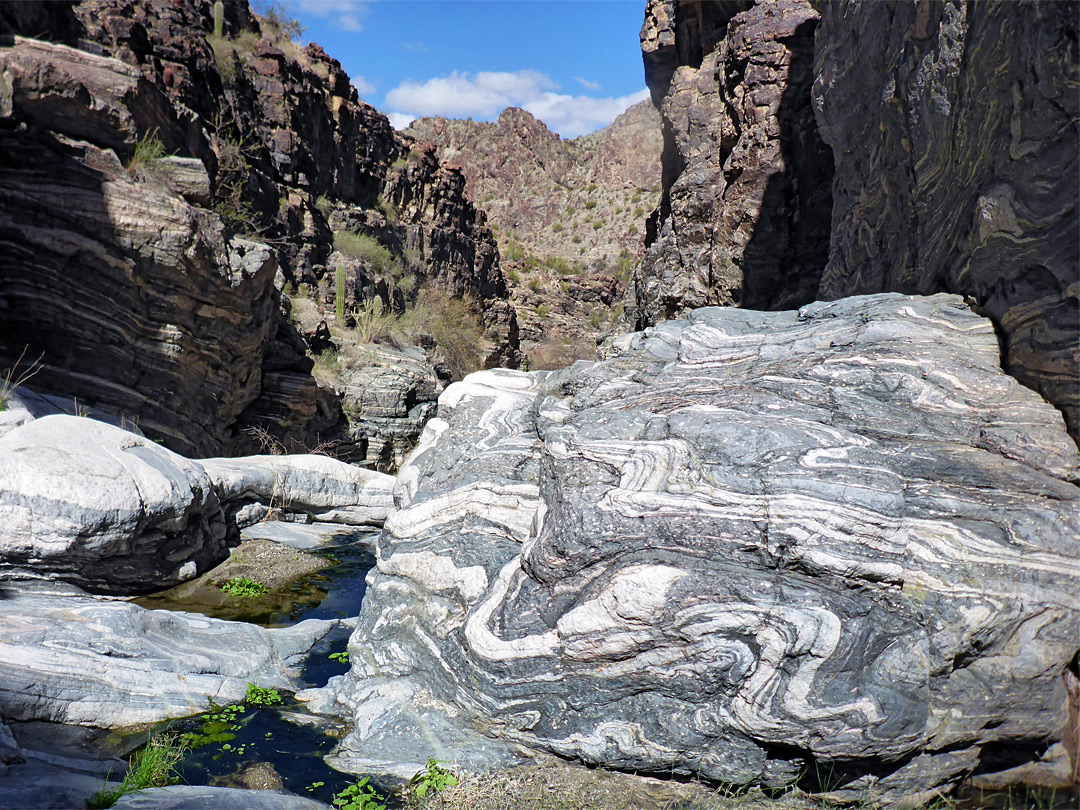
*These are rocks in the crust of the earth, that have changed shape or taken another form
*Shape change is due to heat and pressure
*Heat is from magma flow and pressure is from the plate boundaries (more on them later)
Mining
There are two different types of mining- Open cast mining and deep mining.
Open cast Mining

This type of mining is what cause landfill holes; here is the steps for this method-
*Remove vegetation and top soil
*Use explosives to loosen the rock underneath top soil
*Remove the loose rock by vehicle (diggers)
*Use trucks or railway wagons to take the rock away
*Then there should be a layer of the desired mineral/substance
Open cast mining has a low risk of injury for workers, but because it is in the open there is a lot of noise and air pollution from vehicles coming in and out; therefore, locals complain, which means you can mention that the government, or whoever declared the mining, that they should have had a vote where the locals get a choice on the mine. Only do this if the question asked for something similar where you can add this in for those extra marks!
Deep Mining

*Sink a vertical shaft down into the rocks to the layer of minerals
*Then make a horizontal passage/tunnel through or following the mineral layer
*Extract the minerals by digging (obviously!), which is done by miners and machines
*Bring loose rocks up to the surface and pile up on a waste heap (there is lots to talk about this!)
*Bring the minerals to the surface and transport away by using trucks or trains
This is quite a dangerous procedure, as the longest vertical shaft is between 2.6km and 3.054km deep! There is a high risk of lung failure due to machine smokes, injury due to falling rocks and even death due to both; there is lots to write about this type of mining: about its hazards, risks, what can be done to make it safer, air and land pollution and did the locals get a heads up or vote for or against the continue of the mine.
Advantages and Disadvantages of Mining:
*Minerals are gathered, increasing the quality of life for locals and products to sell and export
*Provides employment as miners and workers
*Economical growth of local area
*Waste piles destroy scenic beauty
*Loss of habitats for wildlife
*Air pollution, causes breathing problems for workers
*High risk of injuries or even death for workers
*Noise pollution effects locals and workers, because of machinery
*Leaves scars on land
Uses of different rocks:
*Chalk is used for cement
*Sand is used for glass
*Gravel is used for concrete
*Clay is used for bricks and pottery
Thanks for reading so far! Coming soon...

No comments:
Post a Comment